


 Cart
Cart
 sales@molnova.com



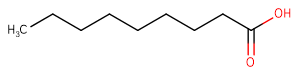
Nonanoic acid
CAS No. 112-05-0
Nonanoic acid( pelargonic acid | Nonoic acid )
Catalog No. M19549 CAS No. 112-05-0
Nonanoic acid is a fatty acid which occurs naturally as esters are the oil of pelargonium. Synthetic esters such as methyl nonanoate are used as flavorings.
Purity : >98% (HPLC)
 COA
Datasheet
HNMR
HPLC
MSDS
Handing Instructions
COA
Datasheet
HNMR
HPLC
MSDS
Handing Instructions
| Size | Price / USD | Stock | Quantity |
| 50MG | 37 | In Stock |


|
| 100MG | 59 | In Stock |
|
| 500MG | 87 | In Stock |
|
| 1G | Get Quote | In Stock |
|
Biological Information
-
Product NameNonanoic acid
-
NoteResearch use only, not for human use.
-
Brief DescriptionNonanoic acid is a fatty acid which occurs naturally as esters are the oil of pelargonium. Synthetic esters such as methyl nonanoate are used as flavorings.
-
DescriptionNonanoic acid is a fatty acid which occurs naturally as esters are the oil of pelargonium. Synthetic esters such as methyl nonanoate are used as flavorings. Pelargonic acid is an organic compound composed of a nine-carbon chain terminating in a carboxylic acid. It is an oily liquid with an unpleasant rancid odor. It is nearly insoluble in water but well soluble in chloroform and ether.(In Vitro):Nonanoic acid upregulates endogenous host defense peptides to enhance intestinal epithelial immunological barrier function via histone deacetylase inhibition.
-
In VitroNonanoic acid?upregulates endogenous host defense peptides to enhance intestinal epithelial immunological barrier function via histone deacetylase inhibition.
-
In Vivo——
-
Synonymspelargonic acid | Nonoic acid
-
PathwayOthers
-
TargetOther Targets
-
RecptorOthers
-
Research Area——
-
Indication——
Chemical Information
-
CAS Number112-05-0
-
Formula Weight158.24
-
Molecular FormulaC9H18O2
-
Purity>98% (HPLC)
-
SolubilityDMSO:10 mM
-
SMILESCCCCCCCCC(O)=O
-
Chemical Name——
Shipping & Storage Information
-
Storage(-20℃)
-
ShippingWith Ice Pack
-
Stability≥ 2 years
Reference
1.Kuzmina N et al. Assessment of irritant skin reactions using electrical impedance--a comparison between 2 laboratories. Contact Dermatitis. 2003 Jul;49(1):26-31.
molnova catalog



related products
-
D-Xylulose
D-Xylulose is converted from xylitol by the enzyme NAD+-linked xylitol dehydrogenase in the glucuronate pathway, the most important xylitol-handling metabolic pathway in mammals.
-
PD128907 HCl
PD 128907 HCl is a potent and selective dopamine D3 receptor agonist, with EC50 of 0.64 nM, exhibits 53-fold selectivity over dopamine D2 receptor.
-
1-phenyl-3,4-dihydro...
1-phenyl-3,4-dihydroisochinoline is a chemical compound.
